Know which leads convert before you buy more of them.
Validate every record at ingest, put a price on why the rest do not work out, and see which supplier is responsible — before the next invoice, not after it.
Sound familiar?
Buying leads is easy. Finding out which ones were worth buying is the hard part.
You pay for the lead either way
A dead number, a disposable email, someone on a do-not-call list. The invoice arrives regardless, and the cost only shows up as a sales team that is busy and not closing.
Nobody can name the supplier at fault
Conversion is down. Three suppliers are feeding you. Everyone has a theory, nobody has the number, and the conversation ends with “let us watch it another month”.
Your reps find the bad leads for you
The cheapest place to catch a worthless lead is the moment it arrives. Instead it goes into the queue, and a rep spends twenty minutes discovering what a check could have told you in one second.
Catch it at the door, then follow the money
Check the lead before your team ever sees it
IP, email, phone, blacklist and credit checks run during ingest, before the record reaches anybody. Fraud scores, disposable addresses, dead numbers, DNC and suppression hits — you decide which ones are a rejection and which ones are just a note on the file.
Rules you write, not a black box
Each check is a condition and an action: reject when the fraud score is above your line, accept below it, combine conditions with AND or OR. The first rule that matches decides. What a check returns is written onto the lead, so you can filter and report on it later.
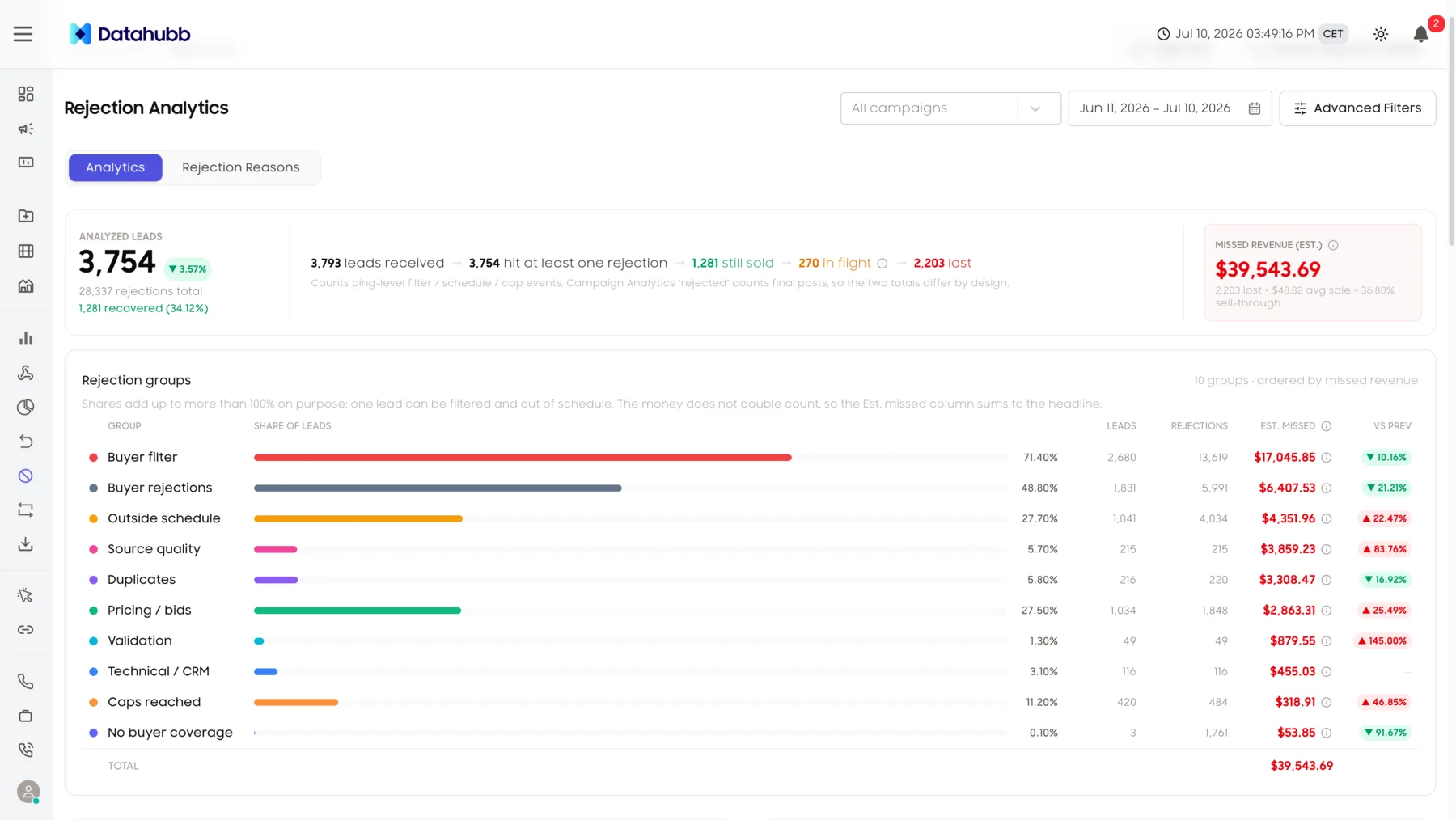
A price on why leads do not work out
Rejections are grouped — source quality, duplicates, validation, technical — and ranked by the money attached to them rather than by volume. That tells you which problem to fix first, which is rarely the loudest one.
Reporting that names the source
Slice the same rejections by traffic source, sub source, affiliate or supplier. When one of them is sending you rubbish, it stops being a hunch you cannot act on and becomes a row you can export and send them.
One view of what you bought and what it did
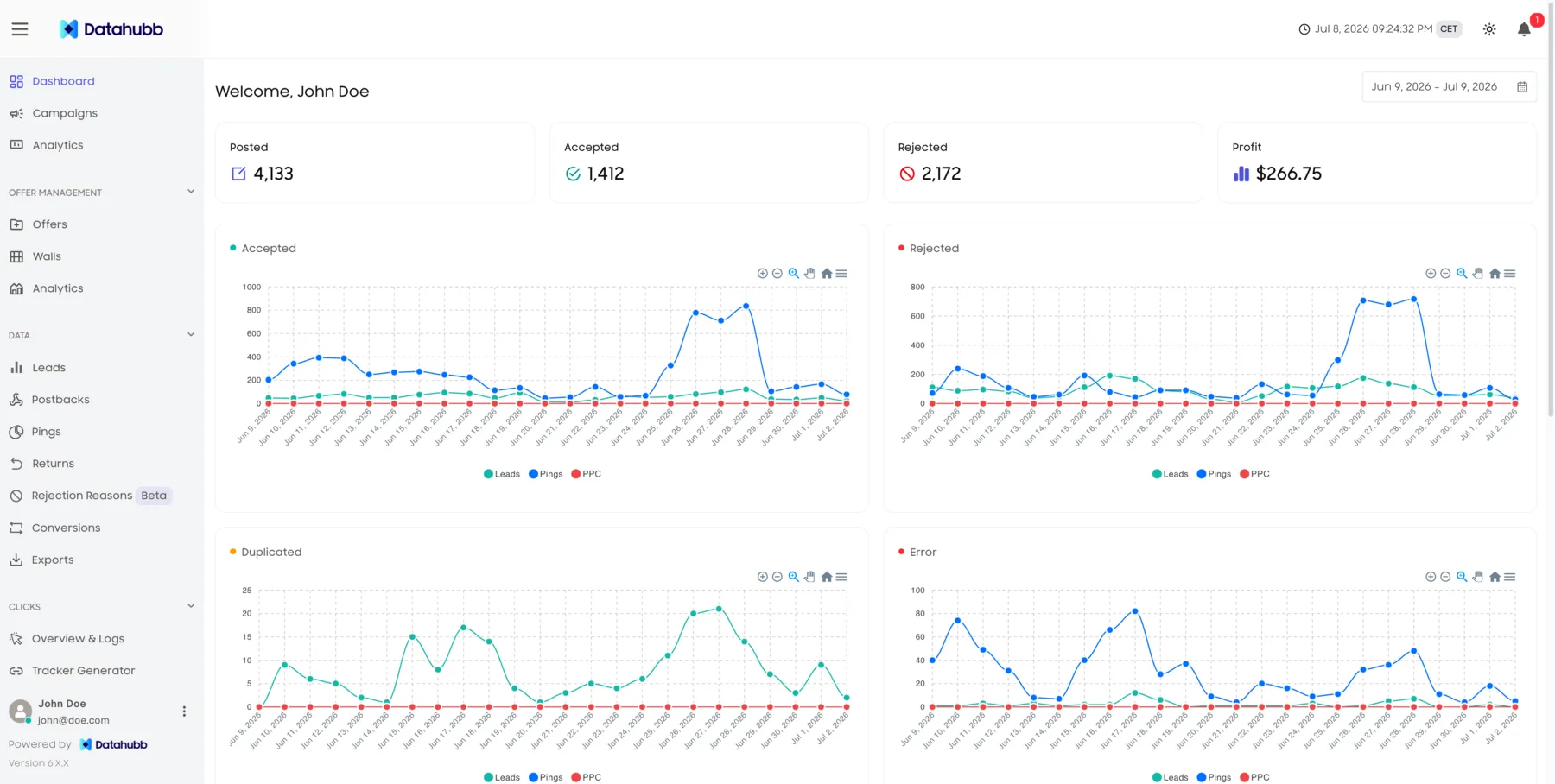
Posted, accepted and rejected against what you spent, filtered by campaign and date. It is the number you take into the supplier call — not a spreadsheet somebody assembled the night before, and not three tools that disagree with each other.
- Accepted and rejected counts against what you spent
- Filter to a campaign, a date range, or a single supplier
- Export exactly what is on screen
Stop paying twice for a bad lead
Frequently asked questions
Find out which of your leads are worth buying.
Start your 14-day trial. Full platform access. Card required, no charge if you cancel during the trial.