Many publishers, one system, nobody chasing you for numbers.
Per-source attribution, caps and filters that catch bad traffic before a buyer does, and a partner login so affiliates read their own numbers instead of asking you for them.
Sound familiar?
A network breaks in three places: visibility, quality, and money.
Publishers email you for numbers
They want to know what converted, what got rejected, and what they earned. You answer the same question all week, by hand, one affiliate at a time.
One bad publisher costs you a buyer
Quality slips on one source, the buyer starts rejecting, and the damage lands on the whole network. By the time it shows up in the totals the relationship is already strained.
Payouts get reconciled by spreadsheet
What the buyer accepted, what came back as a return, what each affiliate is actually owed. Three sources of truth and a month-end that eats a day.
Run the network, not the admin
Every publisher is its own traffic source
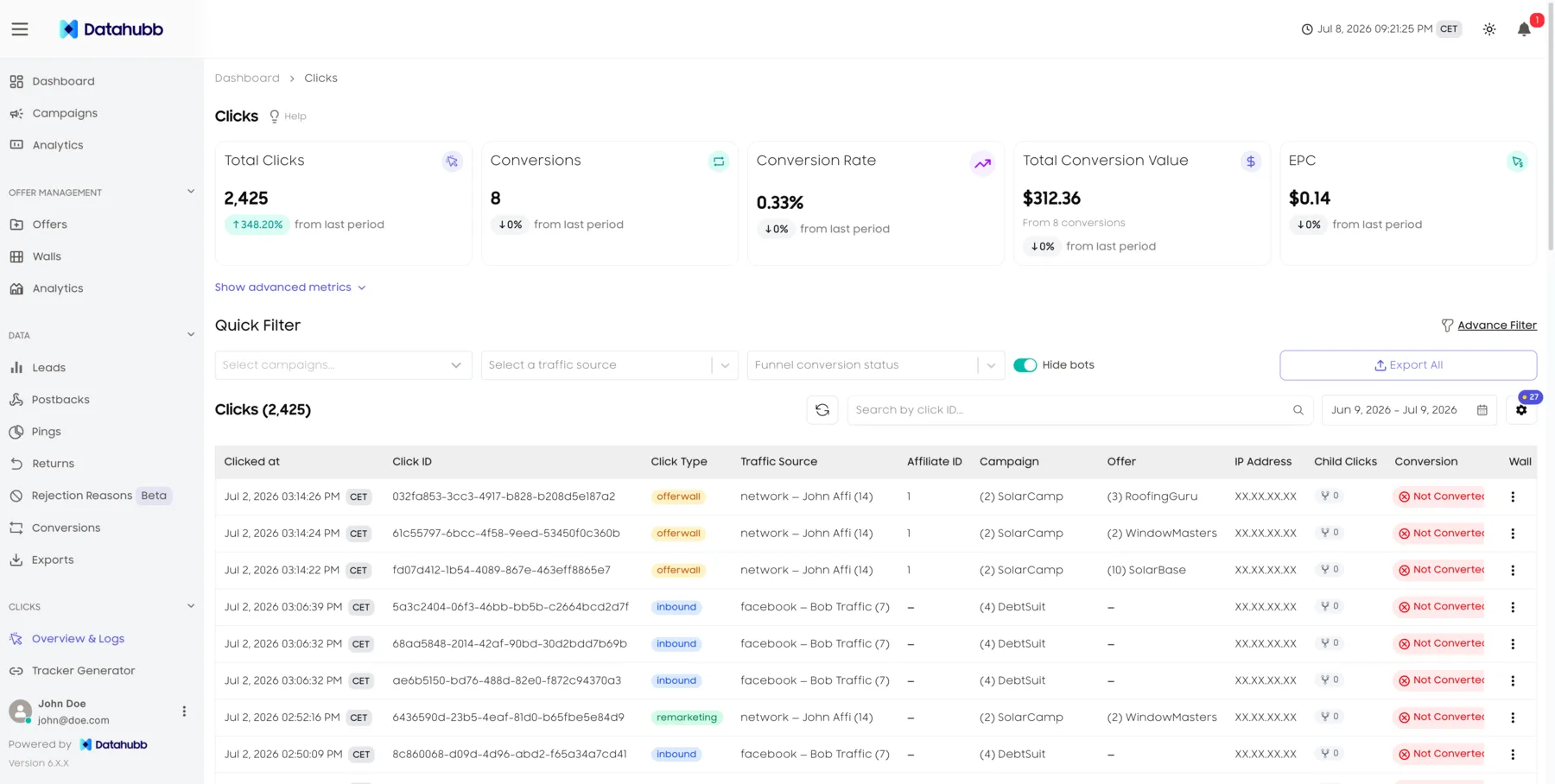
Affiliates point at one hosted page and are told apart by the traffic source they post with. Payout, caps, filters, and reporting all hang off that record — so per-affiliate numbers are structural, not something you rebuild from a sub-ID afterwards.
Postbacks your affiliates author themselves
A traffic source builds their own postback configs: the events they fire on, the tokens in the URL, form or JSON bodies, HMAC signing. They can point their own Meta pixel at their leads through the CAPI preset. You stop hand-crafting a URL per affiliate.
Caps and filters before the damage
Daily, weekly, and monthly volume and budget caps per traffic source, plus filters at traffic-source level — a level above supplier. A source that starts sending rubbish is stopped at the door, not in the month-end review.
Quality visible per source, not in aggregate
Rejections grouped by reason, each with the revenue estimated to be at stake — lost leads multiplied by what a lead actually sold for, times the rate at which rejected leads still went on to sell. Filterable down to a traffic source, an affiliate ID, or a sub-source.
The report your publishers stop asking for
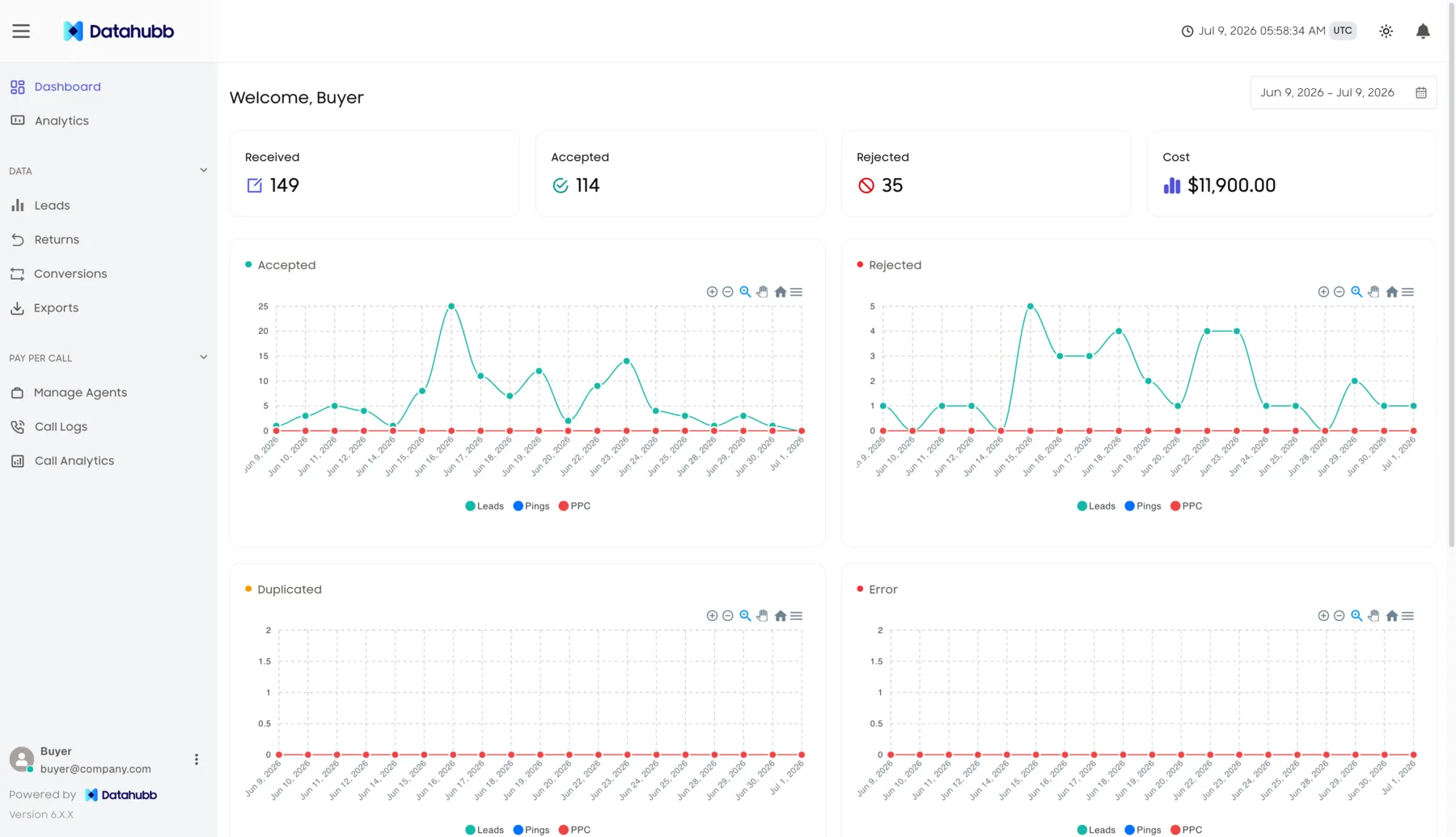
Give a traffic source their own login and they see their own clicks, their own conversions, and what they earned — live, and only theirs. The weekly email asking for a breakdown stops arriving, and nobody has to export anything.
- Each partner sees their own traffic and nothing else
- Live numbers, not a spreadsheet you sent on Monday
- They wire their own postbacks and their own pixel
Add a publisher without adding a process
Frequently asked questions
Give your publishers their own numbers.
Start your 14-day trial. Full platform access. Card required, no charge if you cancel during the trial.