Sell every lead for what it is actually worth.
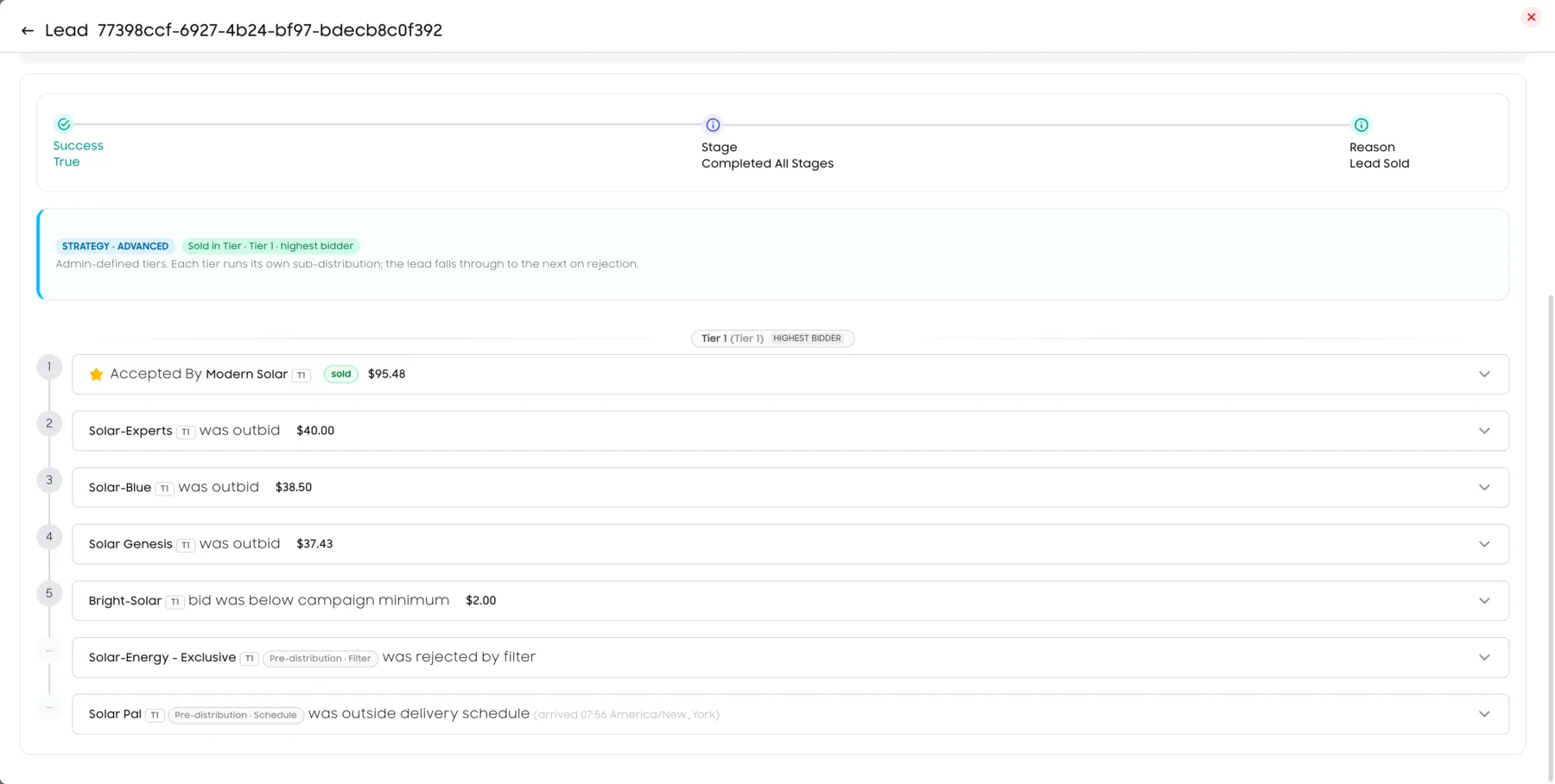
Let buyers bid before they see the record, route through tiers that hold a price, and open any lead to see exactly who bid, who lost, and why.
Sound familiar?
Underselling a lead does not look like a problem. It looks like a sale.
One buyer, one price, every lead
A single buyer on a fixed price is easy to run and quietly expensive. The lead that was worth ninety dollars sells for thirty, and nothing on the screen tells you it happened.
You cannot say why a lead went where it went
It sold to buyer three. Did buyer one bid lower, get filtered, sit outside its schedule, or never get asked? Without that record, pricing a source is guesswork.
One routing rule for buyers who are nothing alike
Your premium buyers should be bidding against each other. Your fallback buyers should be taking whatever is left. Most systems make you pick one rule and apply it to both.
Price the lead, then route it
Make buyers compete for the lead
Highest Bidder pings every eligible buyer at once, collects their bids, and posts to the top one. If they reject on the post, the next highest gets it. The lead sells for what the market says it is worth, not what you guessed last quarter.
Four ways to route, not one
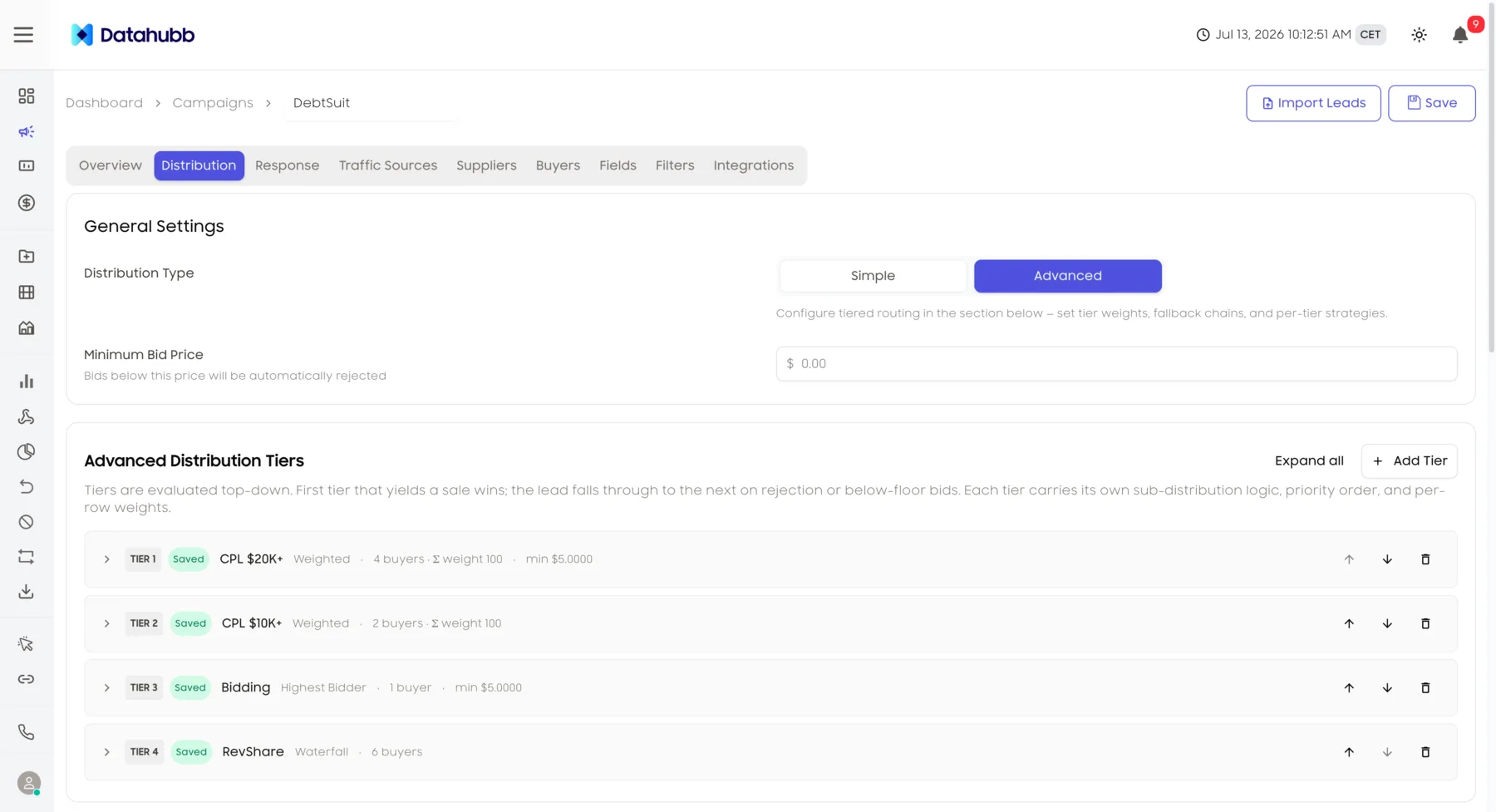
Waterfall for a preferred order. Highest Bidder for an auction. Weighted when you owe a buyer a share of volume. Advanced when you want ordered tiers, each running its own strategy underneath.
Bids before the buyer sees the record
Ping with partial data, collect prices, post the full lead only to the winner. Buyers can run several ping steps — validate first, then bid — and the last step that returns a price is the price that stands.
A breadcrumb for every decision
Every distribution writes down what happened: the mode used, the sorted bidders or the winning tier, and the outcome — no qualified buyers, all below the minimum, all tiers exhausted. The lead detail shows you the run, not just the result.
Tiers that hold a price, and a fallback that does not
Order your buyers into tiers, give each tier its own strategy and its own minimum payout, and let the engine walk down. The top tier can insist on a real price. The bottom tier can take whatever clears. A lead only drops to the next tier when everyone above has said no.
- Each tier runs Waterfall, Highest Bidder or Weighted underneath
- A per-tier payout floor overrides the campaign minimum
- Buyers carry their own order and weight inside the tier
Stop guessing what a lead was worth
Frequently asked questions
Find out what your leads are really worth.
Start your 14-day trial. Full platform access. Card required, no charge if you cancel during the trial.