Catch the bad lead before your buyer does.
Screen every lead on IP, email, phone, DNC, and credit as it arrives — then accept, reject, or enrich it on rules you write. Bad traffic never reaches the buyers you are trying to keep.
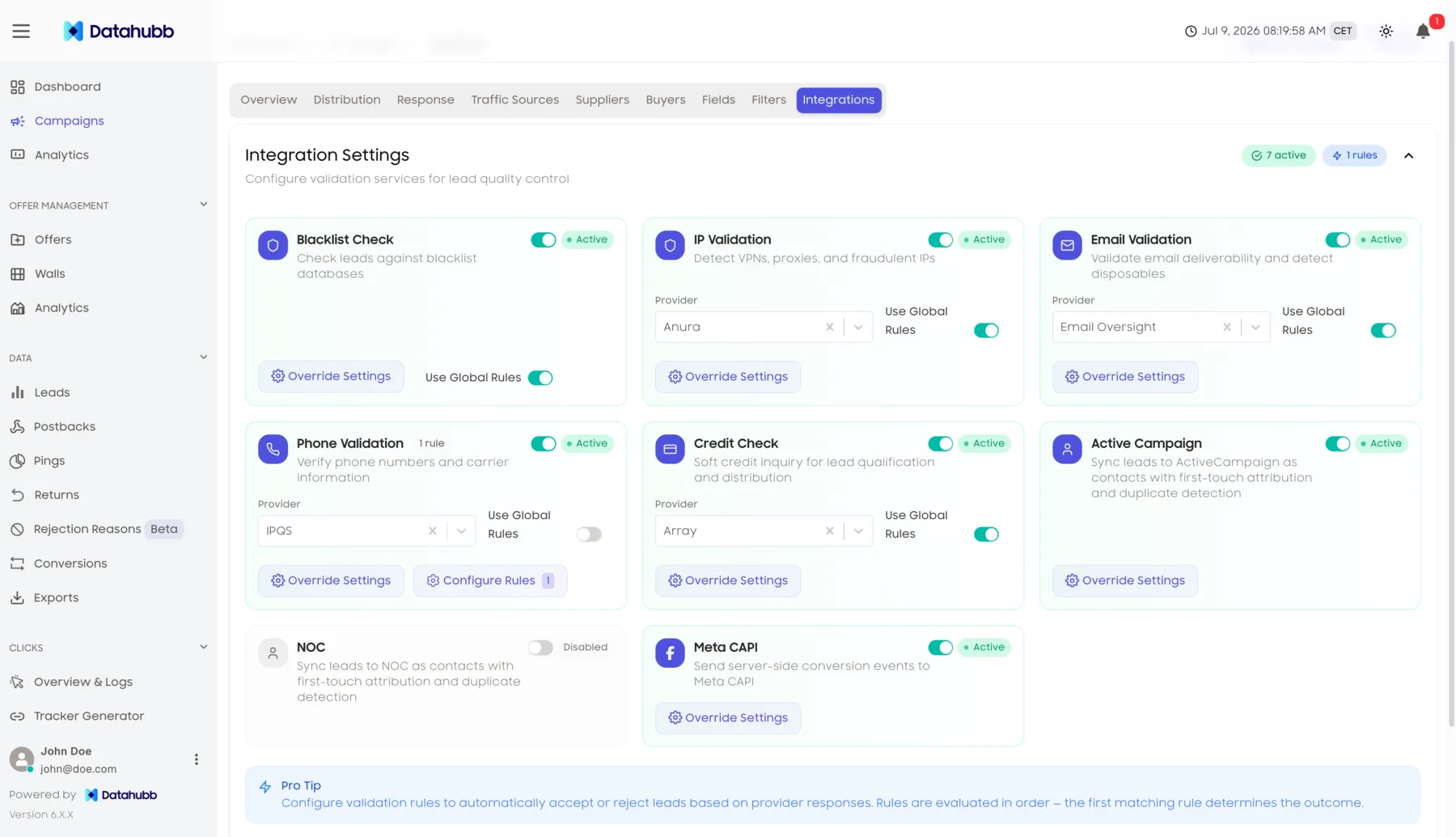
Every lead, before it costs you anything
Screening happens at ingest — before distribution, before a buyer sees the record, and before a bad lead becomes a refund conversation.
IP, VPN, proxy, and bots
Score the connection before you trust the form. Fraud score, VPN, proxy, Tor, data-centre traffic, and known bot signatures — the traffic that costs you buyer relationships, caught at the door.
Email that will actually deliver
Disposable addresses, spam traps, honeypots, dead servers, invalid MX. A lead whose email bounces is a lead your buyer will ask for a refund on.
Phone, carrier, and line type
Is the number live, is it reachable, is it a mobile or a landline, and has it been ported. A buyer paying for calls cares about the difference.
DNC, litigator, and blacklist
Federal and state DNC, wireless, suppression lists, and known TCPA litigators. This one is a hard gate — a lead that fails it is rejected at ingest, not routed and argued about later.
Soft credit qualification
Run a soft credit inquiry and qualify the lead against real offers before you sell it. A soft inquiry, not a hard pull — and a far better idea of what the lead is actually worth.
Rules you write, not a black box
Reject when the fraud score hits 85 or above. Reject when VPN and proxy are both true. Accept when it is 30 or below. Conditions combine with AND or OR, the first matching rule wins, and nothing is decided by a vendor’s opaque verdict.
You set the threshold. Not the vendor.
A provider returns numbers; you decide what they mean. Build conditions on any field a provider returns, combine them with AND or OR, and choose whether a match accepts the lead or rejects it. The first matching rule wins, and if nothing matches the lead passes.
- Reject when fraud score ≥ 85, or when VPN and proxy are both true
- Accept when the score is under 30 — and let everything else through
- Per-campaign overrides on top of one global provider account
A check that only says no is wasting the answer
The interesting part is not the verdict. It is that the provider told you the credit score, the carrier, and the line type — and that all of it lands on the lead in time to be useful.
Frequently asked questions
More on stopping bad leads before they cost you
Stop paying for leads your buyers will reject.
Start your 14-day trial. Full platform access. Card required, no charge if you cancel during the trial.