Ping-Ping-Post: Your Buyers Don't Decide in One Step
Some buyers need two, three or four pings before they price a lead. Multi-step ping in Datahubb lets them ask, then bid higher. See how ping-ping-post works.
Every lead seller has had this call.
A serious buyer wants to come onboard. Good volume, good payouts, exactly the vertical you have been trying to grow. Then their integration doc lands in your inbox and there are two endpoints on it. Hit the first one so they can run their checks and hand back a score. Hit the second one, carrying that score, to get a price.
And your platform can send exactly one ping.
The next buyer has three endpoints. The one after that has four, because their compliance check, their coverage lookup and their pricing engine are three different systems that were never going to be merged for you.
So you do what everyone does. You get an engineer to build a bridge in the middle, or you go back to the buyer and ask if they would mind changing how their entire company works. Neither of those is a good afternoon.
Those buyers are describing ping-ping-post. Multi-step ping is how Datahubb runs it, inside a normal campaign, without the bridge.
What is ping-ping-post?
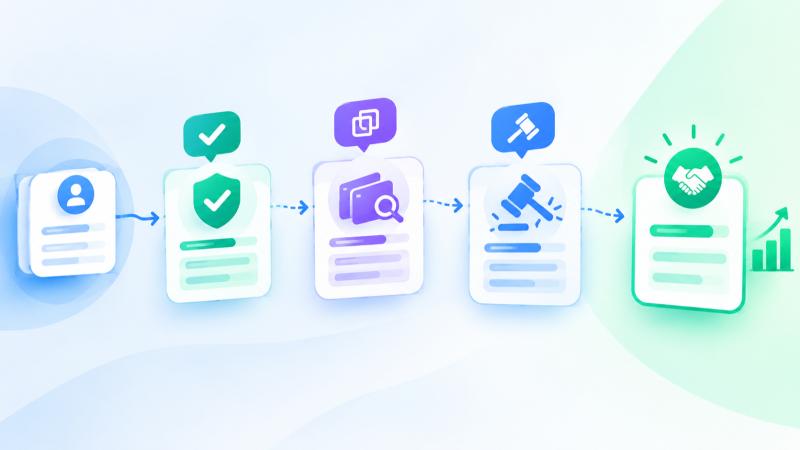
Ping-ping-post is a lead distribution flow where a buyer receives two or more pings before the full lead is posted. Each ping carries a partial payload, the buyer runs one of their own checks (duplicates, coverage, underwriting, scoring) and returns a result the next ping can use. Only after the last ping does the buyer quote a final price and receive the full lead.
Multi-step ping is the Datahubb feature that runs this flow, for as many steps as a buyer's process needs.
If you only read this far
- Buyers who can check, verify and score a lead before they price it bid with confidence. A buyer that quotes $12.00 at their first check often lands at $15.00 once their own checks have cleared. You get the confident number.
- Multi-step ping runs as many ping steps as a buyer's flow needs, for as many buyers as you want in the auction. Two rounds, four rounds, more.
- Every step can use data any earlier step returned, so each round is an informed follow-up rather than a blind repeat.
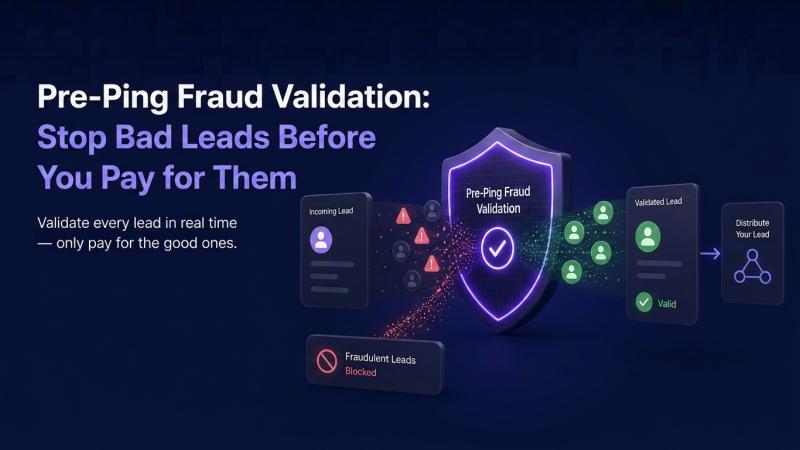
- Datahubb still runs your own checks first. Duplicates, filters, caps, blacklist, DNC, litigator, consent, IP and fraud scoring all run before a single buyer is pinged.
- Every round is logged, so when a lead does not sell you can see exactly where it stopped.
Want to see it on your own campaign? Start a free trial and build your first multi-step buyer in the playground before a single live lead goes out.
Ping, ping, post. Or ping, ping, ping, ping, post.
A normal ping post is one question and one answer. Multi-step ping turns it into a proper conversation, and the conversation runs as long as the buyer needs it to:
Ping 1  →  Their duplicate check     new to us, reference A19X
Ping 2  →  Coverage and capacity     covered in 33604, 3 agents free
Ping 3  →  Their underwriting rules  qualifies, tier B
Ping 4  →  Scoring and bid           quality 84, $15.00
Post    →  Full lead delivered       $15.00
That is four pings before a single lead changes hands. Four is not a limit. It is what that particular buyer happened to ask for.
Each step is a real request with its own URL, method, body, headers and accept or reject rules, and they run in the order you add them.
The part that makes it click is that steps can talk to each other, and not only to the step immediately before. When you build step four, you can reference anything step one, two or three sent back, and Datahubb fills the value in when the request goes out. No bridge, no engineer, no afternoon lost.
Buyers who bid more than once
Any ping step can return a price, and the last one to return a real number is the one we use. If a step does not quote, the price from the previous step carries forward. The only thing that overrides a ping price is a payout you set yourself in a lead filter, because your own rule should always beat a buyer's quote.
That sounds like a small detail. In practice it is the difference between a buyer quoting $12.00 at their first check because they are being careful and quoting $15.00 three steps later because they have now checked, cleared and scored the lead and they are sure. You get the confident number, however many rounds it took them to reach it.
It also fixes a long-standing problem with CPA buyers. A buyer who pays on conversion cannot put a sensible number on a single lead at ping time. Datahubb quotes their payout multiplied by their conversion rate, measured over a rolling 90-day window, so a CPA buyer competes in the same auction as everyone else with a bid that reflects what the lead is worth to them.
The auction runs in rounds. Every buyer in a round is pinged at the same time, so adding buyers never slows you down. Each extra step adds one round for the auction, and a buyer that is slow to answer holds its round only until the timeout, then drops out while everyone else carries on. The buyer with four steps and the buyer with one step both get their answer in, and the best price wins.
Curious what your best buyer would bid if they could ask everything first? Try it free with your own campaign fields.
"Doesn't Datahubb validate all this already?"
It does, thoroughly, and you should lean on it. This is the question we hear most, so it is worth being precise about who does what.
Before a single buyer is pinged, Datahubb runs your side of the check: your duplicate rules, your lead filters, blacklist, DNC and litigator scrubbing, TrustedForm and Jornaya consent verification, IP and fraud scoring, and every buyer's caps, budgets and calling hours. A lead that fails any of that never reaches a ping at all. Phone and email validation run on the post leg, right before the full lead is delivered, so you only pay for those checks on leads that actually sold. Every junk lead you keep out of the auction protects your accept rate with every buyer in it. We wrote up why validation belongs before the ping, with real rejection numbers, in Why We Validate Leads Before the Ping, Not After the Post.
What no platform can do is answer the questions that live inside the buyer's own business:
- Is this consumer already in their CRM from a form they filled in last Tuesday?
- Do they still cover this zip, after they quietly dropped two counties last week?
- Is there an agent free right now, at 4:52 p.m. on a Friday, with the room already at cap?
- What do their underwriting rules make of this applicant, in their vertical, at their risk appetite?
- What does their own scoring model think this specific lead is worth to them today?
That is live, private, commercially sensitive state. No buyer is going to export it into your platform, and you would not want to maintain a stale copy of it if they did.
And nobody is forcing buyers to build anything new. Those endpoints already exist. That two-endpoint integration doc sitting in your inbox is a buyer telling you they already built them. Multi-step ping means you stop asking them to tear their process apart to fit your platform.
The two halves make each other better. The cleaner your leads are when they enter the auction, the fewer wasted pings you send. The more of their own decision a buyer can make before quoting, the more confident, and higher, their number.
Their duplicates, not yours
A buyer's duplicate check is the clearest example, because you cannot replicate it.
Datahubb's own dedup engine runs early in ingestion. You can scope it to the whole campaign or to a single buyer, match on any field or all of them, look back as far as you like, and check phone, email, IP or any custom field. It keeps your inventory clean and stops the same lead being sold twice.
What it cannot know is that the consumer filled in that buyer's landing page last Tuesday. Only the buyer knows that, and they are not going to pay you for it.
So if that is one of their checks, give it a step. If the consumer is already theirs, you find out before anyone has bid on anything and the auction moves along. If the consumer is new, the next round carries their reference forward and keeps going.
A duplicate is reported as a duplicate, not lumped into a generic rejection pile. A response like "CRM error: duplicate record" is picked up on its own. If a buyer uses their own convention, DUPE or a bare 409, you map it once with a response rule on that buyer and from then on it lands under duplicates too, with the buyer's own wording preserved. You can split them by phase and see whether buyers catch dupes at ping or only discover them at post. When you sit down to work out why a source is underperforming, that is the difference between "these leads are stale" and "these leads are not good enough", and those need very different fixes.
Posting a lead a buyer already owns is one of the quickest ways to sour a relationship you worked hard to build. Catching it in an early ping costs you nothing.
When a lead does not sell, you can see why
Every attempt is recorded in full: the whole delivery attempt for that lead and buyer, a log for each individual round, and the exact request and response behind each one. Ten steps, ten logs.
In the lead timeline, an amber star means that buyer won and the sale was recorded. A teal star means they passed the ping but did not close on the post. Between the stars and the step logs, "why didn't this one sell, and which round did it die on?" takes about ten seconds to answer instead of an afternoon of guessing.
Getting it running
Set up your own validation first, because that is what protects your accept rate. Then turn on Ping/Post for the campaign, open the buyer, and add ping steps in the order their flow runs. If you handle TCPA consent, Datahubb attaches the consent mapper to the last ping step for you, so consent lands at the moment of commitment and never somewhere in the middle of the sequence.
Then test it without touching a live buyer. The playground sends real ping and post requests with your campaign's own fields, or you flag a lead as a test and it runs through validation and pricing exactly like a real one, routed to a test buyer and kept out of your analytics. The full setup guide is in the help center.
See what your hardest buyer looks like in Datahubb
One ping asks your buyers to guess. Multi-step ping lets them check, verify, score and only then decide, and buyers who are sure of a lead pay more for it than buyers who are hedging.
Start 14 days, full platform trial and build a multi-step ping buyer in the playground before a single live lead goes out. Your own campaign fields, your own validation rules, real ping and post requests against a test buyer.
Or send us the integration doc that gave you a headache. We will map it to a multi-step ping and show you exactly what it looks like, before you commit to anything.
Frequently asked questions
Comments
No comments yet — be the first to share your thoughts.